What is Body Burden?
Originally published in 2017. Fully updated May 2026
Have you ever heard the term body burden? It refers to the accumulation of chemicals and toxins in your body, and it's something every single one of us has, whether we know it or not.
A few years ago, I came across a study that unsettled me. Researchers tested the umbilical cord blood of ten newborn babies. Babies who hadn't yet taken a breath of outside air, eaten a meal, or used a single personal care product. And they found an average of 200 industrial chemicals and pollutants in each sample.
Two hundred.
In newborns.
I remember sitting with that for a moment. Once the initial freakout dissipated, I got mad. Then I got fiesty. Then, I calmed down and thought about what I could actually do about this. Because here's the thing: if babies are arriving in the world already carrying a chemical load, the rest of us are carrying one too.
And once I understood what body burden actually is, and what I could do about it, everything about natural living felt a little more purposeful. So, what started as a panic eventually turned into practical steps with meaning behind them. Helping you do the same is a big part of why this website, No Fuss Natural, exists.
So What Exactly Is Body Burden?
Body burden is the accumulation of chemicals and toxins in your body at any given time. We all have one – every single person on the planet. It's not a sign that you've done something wrong. It's simply the reality of living in a modern world.
These chemicals enter our bodies through the air we breathe, the food we eat, the water we drink, and the products we put on our skin. They come from cleaning supplies, furniture, pesticides, plastics, fragrances, and more. Over time, they build up — and our bodies have to work constantly to process and eliminate them.
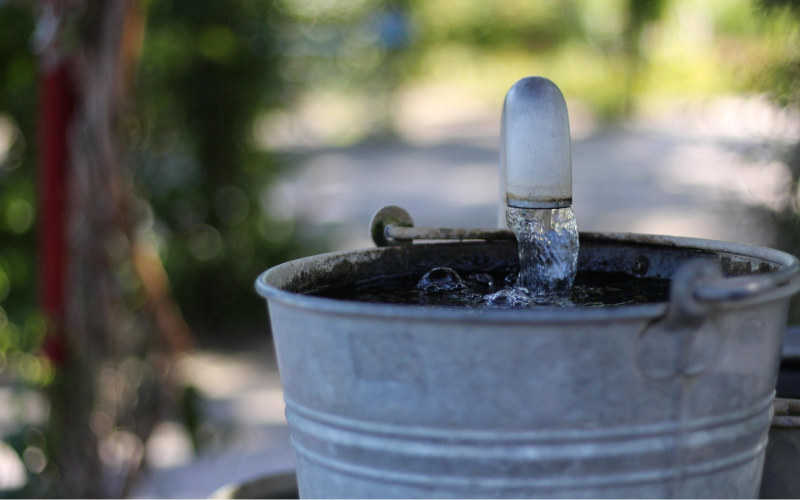
Think of it like a bucket. Your body's detoxification systems — primarily your liver, kidneys, skin, and lymphatic system — are always working to empty that bucket. The problem is that in today's world, many of us are filling the bucket faster than our bodies can empty it.
When that happens, things start to slow down. Energy drops. Sleep suffers. Digestion gets sluggish. Skin flares up. Hormones go haywire. The immune system struggles. None of these things happens in isolation; they're often the body's way of signaling that it's working too hard just to keep up.
Why This Is Actually Good News
I know — this sounds like a lot. And if you've just learned the term “body burden” for the first time, it can be a little anxiety-inducing.
But here's the reframe I want to offer you, and it's the reason this topic can give us hope rather than anxiety:
You have more control over your body burden than you might think.
A significant portion of what fills that bucket comes from things you can actually change. The personal care products you use every day. The cleaning supplies under your sink. The food on your plate. These are areas where small, consistent choices add up to a real reduction in your toxic load — without needing to move off-grid or spend a fortune at Whole Foods.
One of my favorite quotes captures this perfectly:
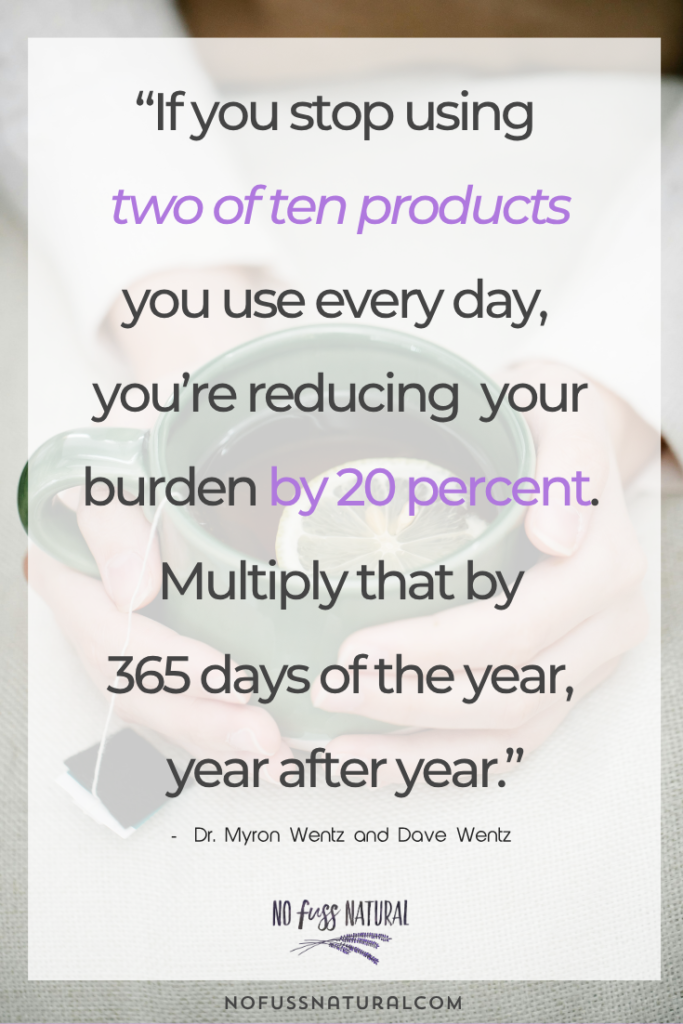
“If you stop using two of the ten products you use every day, you're reducing your body burden by 20 percent. Multiply that by 365 days of the year, year after year.” — Dr. Myron Wentz and Dave Wentz, The Healthy Home
Twenty percent. Just from swapping two products. That's pretty encouraging!
Check out The Healthy Home book here.
The Three Areas That Matter Most to Reduce Body Burden
When it comes to reducing body burden, three areas have the greatest impact for most people. They're also the three pillars of everything I write and teach here at No Fuss Natural.
1. What You Put On Your Body
Your skin is your largest organ, and it absorbs a significant portion of what you put on it. The average person uses multiple personal care products every single day — shampoo, conditioner, moisturizer, deodorant, makeup, toothpaste — and conventional versions of all of these can contain dozens of synthetic chemicals.
This is often the easiest place to start making swaps, because there are so many good alternatives now — whether you make your own or choose cleaner store-bought options.
Check out the ever-growing Low-Tox List for healthier alternatives and natural, non-toxic swaps.
2. What You Use to Clean Your Home
Conventional cleaning products are among the most chemically dense items in the average household. And because we use them on surfaces we touch, breathe in their fumes, and often don't rinse them off, they can contribute significantly to body burden. Both ours and our children's.
The good news is that effective natural cleaning really is simple. A few well-chosen ingredients handle most household cleaning tasks beautifully. It's easy to make your own cleaners, and there are many low-tox versions available for purchase these days,
too!
3. What You Eat
The food we eat is one of the most direct routes chemicals take into our bodies; through pesticide residues, additives, preservatives, and the packaging food comes in. Prioritizing whole, real food and reducing ultra-processed options is one of the most powerful things you can do for your overall toxic load.
You don't have to eat perfectly. But every whole food meal is a small reduction in what your body has to process.
And Don't Forget: Support Your Body's Natural Detox
Reducing what goes in is only half the picture. The other half is supporting your body's ability to process and eliminate what's already there.
That means:
- Sleep — your body does its deepest detoxification work while you sleep
- Movement — helps lymphatic drainage and circulation
- Hydration — your kidneys need water to do their job
- Stress management — chronic stress impairs detoxification (yes, really)
- Fiber and nutrient-dense food — feeds the gut microbiome and supports liver function
None of this is complicated, even though it may feel like it at times. It's the same basic, foundational stuff that supports every aspect of health.
And if it all feels like too much, there are ways to simplify what feels overwhelming. Which is what No Fuss Natural is all about!
Want to dive deeper? Read The Six Foundations of Health.

Start Small. Seriously.
If you're reading this and feeling the urge to throw out everything in your bathroom and start over — pause. That's the overwhelm talking, and overwhelm is the enemy of actual change.
The goal of reducing body burden isn't perfection. It is not all or nothing. Although I understand it's easy to feel that it is (I’ve been there! Frozen at the grocery store, not knowing what to do!). It's about progress; slowly reducing what your body has to deal with, one swap at a time, until your bucket starts emptying faster than it fills.
Pick one area. Make one change. Let it become comfortable before you make another.
That's the no-fuss approach. And in my experience, it's the one that actually sticks.
It’s never too late to start changing your habits! Body burden is real, but you can support your body in easing a variety of body issues, including mental health issues and physical issues, if you just give it a boost and help it to unburden by reducing the load it carries.
Sources:
Environmental Working Group, Body Burden: The Pollution in Newborns (2005) — ewg.org
Wentz, M. & Wentz, D. (2011). The Healthy Home. Vanguard Press.